So. Here I am. A little over two months after I touted that I would be reading a book a month. One book, out of my comfort zone, during a one month period.
All I can say is woops.
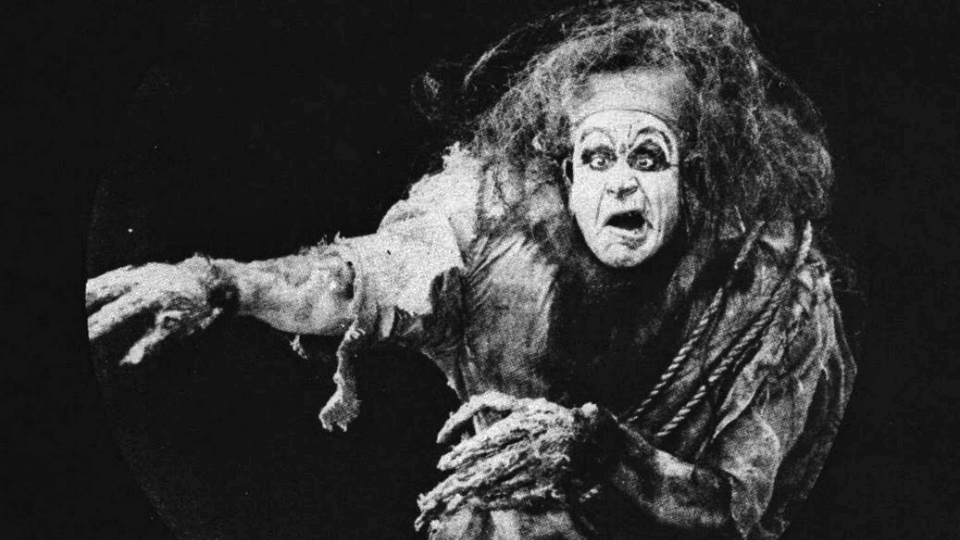
But I finally finished and I’m here to bring you my opinions on Mary Shelley’s Frankenstein!
I want to start by saying Dr. Frankenstein is one whiny little man. “Woe is me! I have created an ugly creature that is killing my loved ones, but it isn’t my fault. No no! It’s all him!”
Take some responsibility, Frank. Seriously. You created, in your words, “a wretch”, but he didn’t necessarily become evil until you abandoned him, forced him to survive this cruel world alone, and then declined to create the one thing that would make him happy — a companion.
He just wanted a little attention! He was acting out in order for you to notice him! I’m not saying it’s right. But neither is abandoning a completed project.
Putting aside Victor’s character flaws, Mary Shelley made me think about a lot of interesting topics.
A simple one that comes to mind, and related to my earlier rant — taking responsibility for one’s actions. Frankenstein poured himself into his creation feverishly, and when the end result was a little bit displeasing tp the eyes, he kicks the poor wretch out on the streets! “Yeahhh…This is awkward. You definitely aren’t as pretty as I imagined, so like you’re definitely going to have to leave now. Bye.”
I’m sorry that you didn’t make him in man’s image, Victor, but come on! You had to have known what he would look like. You created him and you alone. Did you think that by throwing life into the mix it would change his features?
Dumby.
Further more, by unleashing his creation on society untrained, the deaths of his loved ones can also be pinned on Frankenstein.
I think to an extent, Frankenstein knows that, but instead of directing his anger at himself, he puts it all on the monster, vowing to follow him until he either kills the monster or himself.
And in his retelling of the story to Walton, he constantly pities himself and the trials and tribulations he has undergone.
The amount of tears Victor shed in this book probably created the Dead Sea.
I don’t want to come off as callous. Losing that many of your loved ones so quickly would traumatize anyone. If it were me, I’d probably be locked up in a windowless room creating my own salty ocean.
But the fact remains that Frankenstein shirked his responsibilities as a creator and then was angry with the result. Here, I wondered if Shelley is speaking to a religious comparison or to a more literal parental responsibility. Perhaps both.
I say the latter because I know Shelley suffered a great deal in her own personal life — multiple miscarriages, losing her own husband quite early, and then raising a son that didn’t live up to her grand expectations. Some of those personal and tragic experiences must have found their way into her characters, if not shaped the story completely.
Getting back to the religious lens, God created Earth and the humans that inhabit it much like Victor created his wretch. (Sorry, buddy. You were never given a name so I’m forced to call you what everyone else did.)
God did not teach wrong from right. He just let the people loose to create all of the havoc and chaos they desired, with the warning, “Don’t eat from that tree.” And then when God was unhappy with the outcome, He smote them in the various ways God smites people. (I never thought I would get the chance to use the word ‘smote’. Twice!)
Of course, I am generalizing and summarizing a thousand-page book. But how often do we find ourselves questioning events? I am not religious myself. More of an agnostic, if you have to put a label on it. But there are so many times I find myself, and hear others, asking God (or higher power) why? I lead a good life. I’m nice to people. So why am I burdened with this problem when others who are much worse than I live without this trouble? People often say God is trying to teach you a lesson in these instances.
To me, it’s the same as punishing a child for breaking a rule they were never taught to follow in the first place.
Shelley also makes the reader question science. How far is too far? Frankenstein reanimated the dead. Is this too far? Shelley doesn’t state either way. In my opinion, I am not ready to condemn the experiment. If Frankenstein had taken responsibility for his creation and educated it properly, whose to say things wouldn’t have turned out differently?
One thing is for certain, Frankenstein’s creation was superior to the scientist himself. Not superficially, but mentally. He learned a few different languages in the span of a winter by observing a family through a window. He felt every emotion and was a much more eloquent and poignant speaker than Frankenstein. (He also didn’t burst into tears or fits of rage when he was trying to argue his point.) He could survive in extreme conditions, possessed the strength of ten men, and was extremely rational in his thought process. When you examine these facts, (and forget the whole mess with the murdering), the wretch is a success!
I had some very intense conversations with my boyfriend about Shelley’s themes. I’m not going to keep dissecting the book because most people read this back in high school and have already explored said themes.
But this is the beauty in literature. It makes you question belief systems. It creates discussion and debate.
This is why I set this goal for myself: of reading novels outside of my normal consumption. I wanted to get the gears moving again. I like questioning, arguing, and conversing.
Yes it took me over two months to finish, but I did finish!
I’m open to hearing other people’s opinions on Shelley’s themes, Frankenstein’s tears, or if you hate me for bringing up religion. Comment away, dear reader!
On a side note, I also read two of Cleo Coyle’s coffee house mystery books. I just can’t quit you, chic lit!
 dianna.bell